


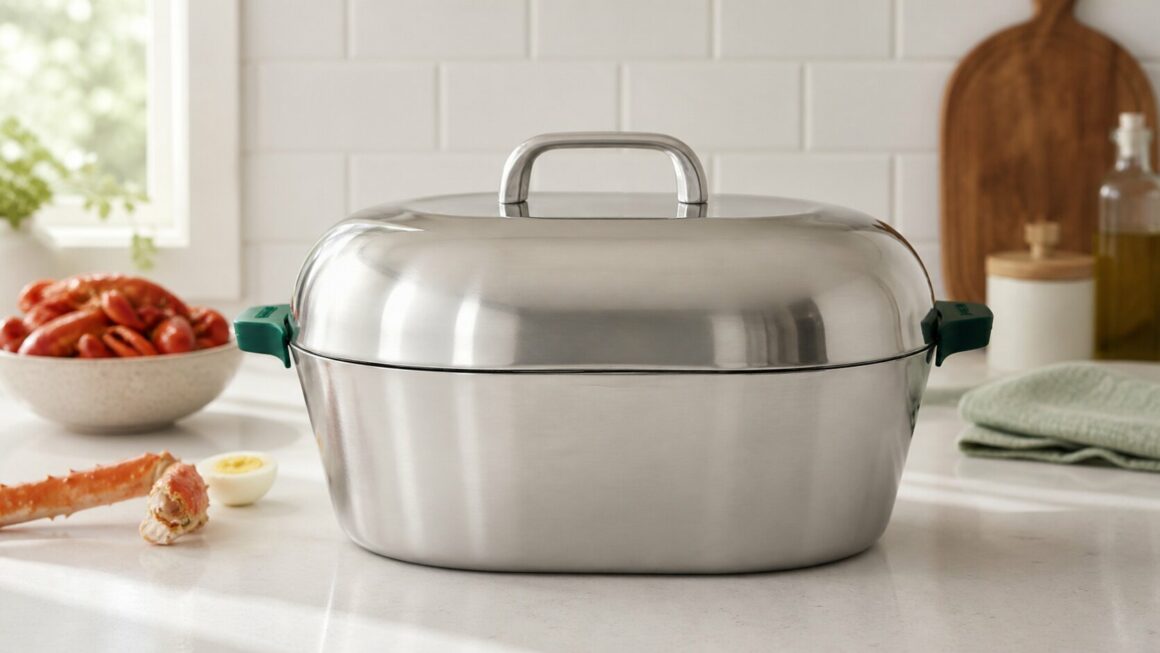
That heavy oval roaster sitting on your back burner — the one your grandmother used for Sunday gumbo, the one you inherited and now reach for every time you make a stew — has somehow ended up on a “toxic cookware” list in your TikTok feed. And suddenly you’re second-guessing every pot of red beans you’ve ever cooked.
You’re not alone. “Is Magnalite safe?” is one of the most-searched cookware questions in America right now, fueled by a 1970s Alzheimer’s scare that mainstream science has since put to bed, a recent FDA warning about an entirely different brand of imported aluminum cookware that’s being conflated with all aluminum, and a steady drip of fear-bait content designed to sell you a $400 ceramic replacement.
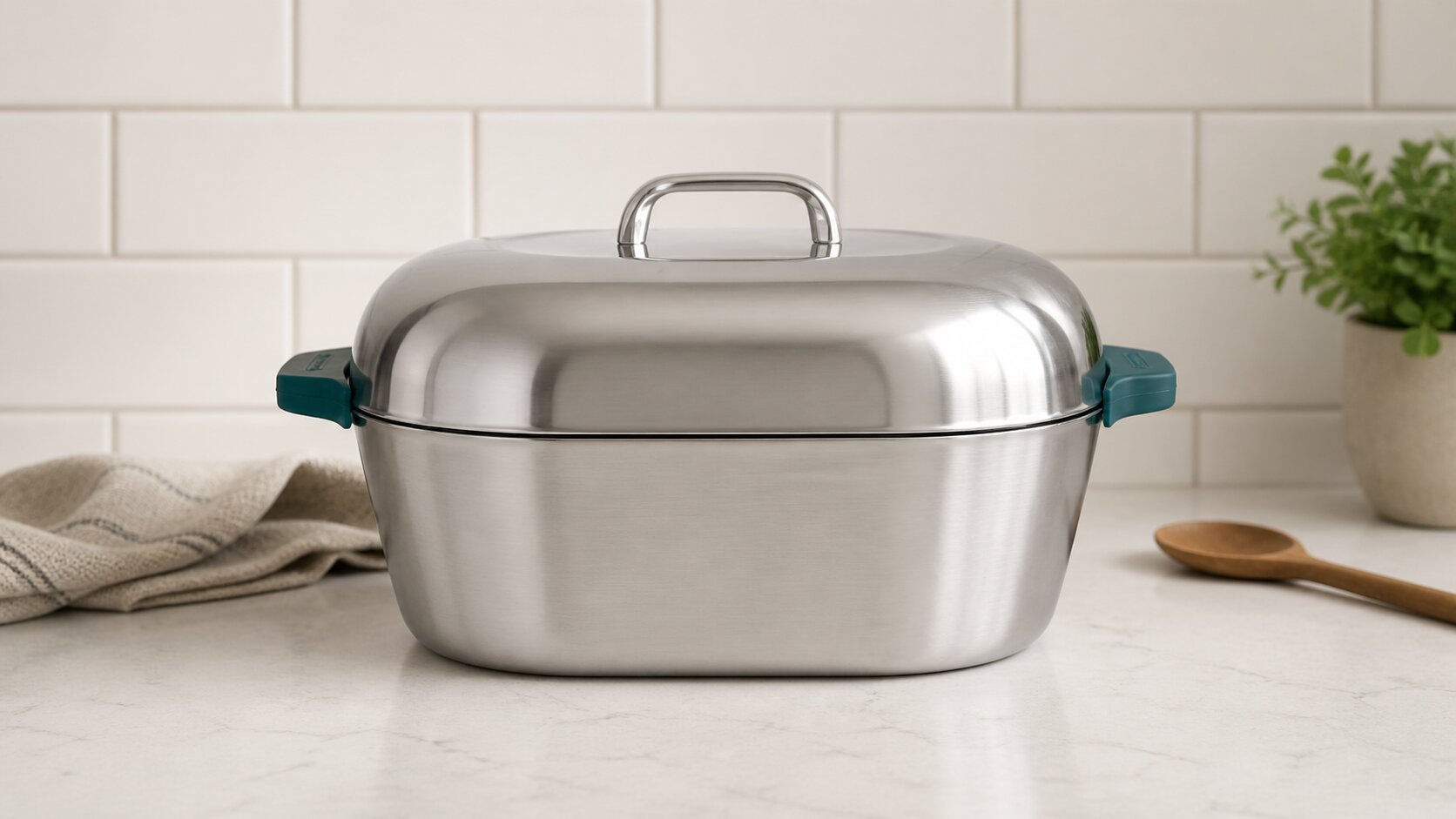
Here’s the short version: after 90 years of continuous use, multiple peer-reviewed leaching studies, a permanent display at the Smithsonian, and the official consensus of the FDA, the World Health Organization, the Alzheimer’s Association, and Health Canada, Magnalite has held up remarkably well to scrutiny.
In this review, we’ll trace exactly where the safety concerns came from, break down what Magnalite is actually made of and why that alloy matters, address every fear point-by-point, compare it head-to-head with cast iron, stainless steel, non-stick, and ceramic — and deliver a clear verdict on whether you should keep cooking with your Magnalite (or pick one up if you don’t own one yet).
Magnalite Safety Concerns
Where exactly did these fears come from? Three places, mostly.
The 1960s–70s Alzheimer’s scare. In 1965, researchers Wisniewski and Klatzo injected aluminum salts directly into rabbit brains and produced tangle-like lesions. A series of post-mortem studies in the late 1960s then reported elevated aluminum in the brains of Alzheimer’s patients. The takeaway in pop-science magazines was loud and obvious: aluminum causes dementia, ditch your pans.
The takeaway in actual neuroscience labs turned out to be very different. The post-mortem findings were eventually traced to laboratory contamination — the staining water itself contained aluminum, and the amyloid plaques in Alzheimer’s brains absorbed it. With cleaner laboratory methods, no excess aluminum was found. The Alzheimer’s Association now states plainly that studies have failed to confirm any role for aluminum in causing Alzheimer’s, and few experts today believe that everyday sources of aluminum pose any threat. A 2014 review in the Journal of Occupational and Environmental Medicine titled “Is the Aluminum Hypothesis Dead?” concluded that researchers have largely abandoned it.
The 2025 FDA lead warning. This is being heavily misread online. The FDA’s recent alert specifically targets imported “Hindalium” aluminum-alloy cookware made by a single manufacturer in India that tested positive for lead contamination. It does not apply to American cast aluminum cookware like Magnalite, which has no documented lead or cadmium issues.
Acidic-food anecdotes. Cooks who’ve simmered tomato sauce in raw Magnalite for hours have noticed a faint metallic taste or gray tint. This is real chemistry — strong acids do slightly dissolve aluminum’s protective oxide layer — but the amounts are tiny and well within every regulator’s safety limits, as we’ll see in the next section.
So are there grounds for the worry? In the sense that they’re rooted in real history, yes. In the sense that they hold up to scrutiny today, no. The science is settled.
What Are Magnalite Pots Made Out Of — Is Magnalite Cookware Safe?
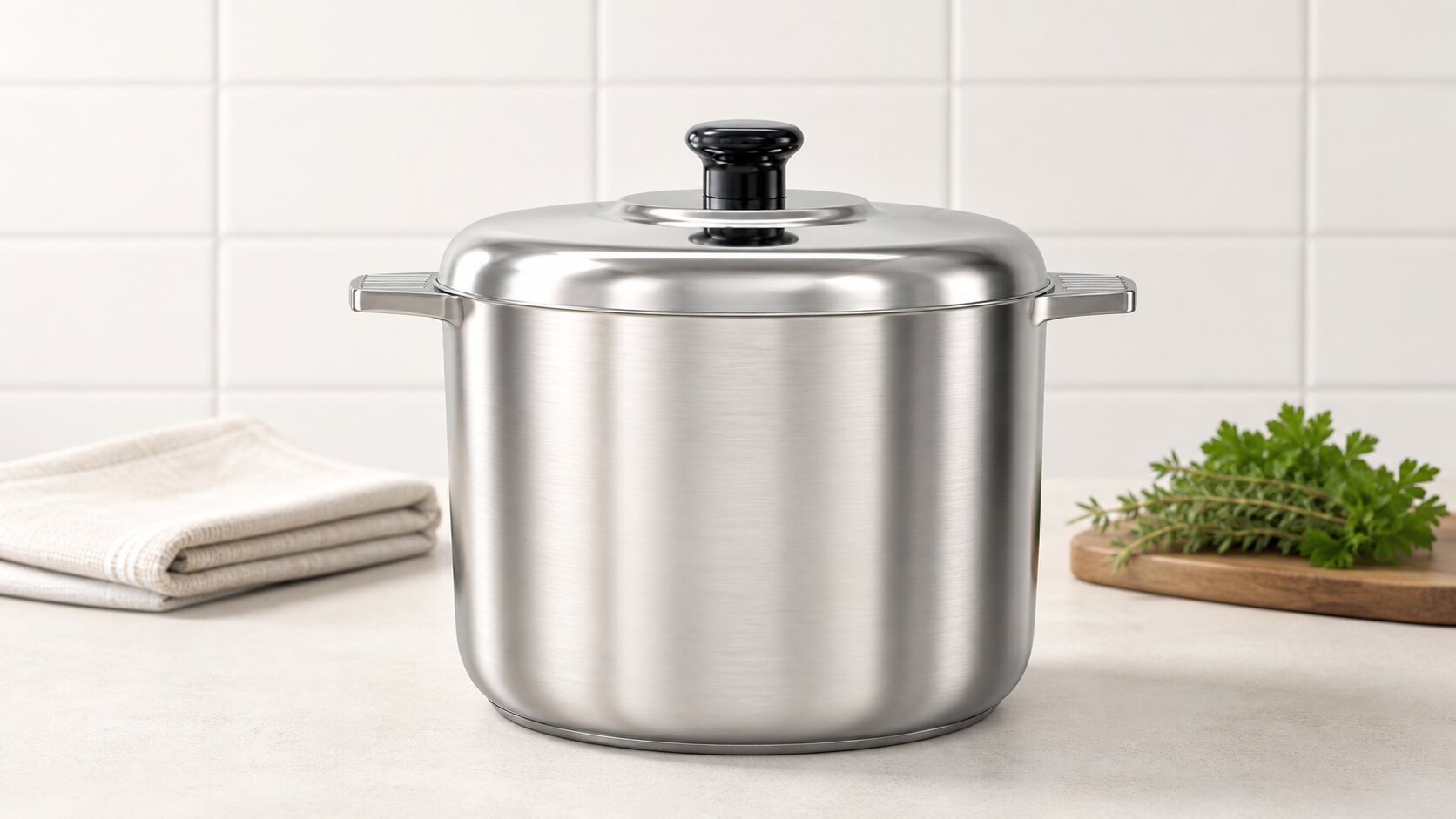
Magnalite is cast from a proprietary magnesium-aluminum alloy — roughly 5–7% magnesium with the balance aluminum, plus trace silicon and iron. Metallurgically, this places it in the AA5xxx-series family (close to AA5052 and AA5083), the same alloys used in marine hulls, structural panels, and aerospace assemblies. The brand name itself is a portmanteau: MAGNesium + ALuminum + “lite.”
The pots are sand-cast — molten alloy poured into sand molds, slowly cooled, demolded, and hand-polished. The base of a Magnalite pot is roughly the thickness of two stacked silver dollars, with thinner sides. That deliberate variable wall thickness is the engineering reason these pots distribute heat so evenly. It’s also why a design from 1934 still outperforms a lot of modern $300 cookware.
Now let’s tackle every safety fear, head-on.
Fear #1: Aluminum leaches into food and causes harm. It does leach in measurable amounts — but the amounts are small, and the human body handles them efficiently. Less than 0.3% of ingested aluminum is absorbed by a healthy GI tract; the rest passes in feces, and healthy kidneys clear what is absorbed. A 2006 study in Sensors and Actuators B measured tomato sauce cooked in aluminum and found 2.7 mg per 100 g serving. The WHO’s Provisional Tolerable Weekly Intake is 2 mg of aluminum per kilogram of body weight per week — that’s 140 mg per week for a 70-kg adult. A worst-case acidic meal in raw Magnalite delivers about 3% of that weekly threshold.
Fear #2: Cookware is the main source of dietary aluminum. It isn’t, and not even close. According to Health Canada’s official guidance, the average person takes in about 10 mg of aluminum daily — mostly from food — and pots and pans contribute only one or two milligrams of that total. Most dietary aluminum comes from food additives in baked goods, processed cheese, and grain products. A single antacid tablet can contain more aluminum than a year of cooking in Magnalite.
Fear #3: Lead and cadmium contamination. Not a Magnalite issue. The 2025 FDA warning targeted scrap-aluminum cookware imported from a specific Indian manufacturer — a different product category made from recycled metal of unknown provenance. American-made Magnalite has no documented lead or cadmium concerns whatsoever.
Fear #4: PFAS, PFOA, and “forever chemicals.” Here’s where Magnalite actually wins decisively against most modern cookware: it has no non-stick coating of any kind. No Teflon, no PTFE, no GenX, no PFAS. A 2022 University of Southern California study found that damaged non-stick pans can release up to 9,000 microplastic particles per cooking session — a problem Magnalite simply doesn’t have, and never will.
Fear #5: The magnesium in the alloy. Magnesium is an essential nutrient with an adult RDA of 310–420 mg/day. Trace amounts from cookware are nutritionally neutral to slightly beneficial. There’s no toxicity pathway here.
Fear #6: Acidic foods like tomatoes and citrus. Real but easily managed. Don’t store acidic foods in the pot for hours after cooking — transfer them to glass. Don’t simmer wine reductions overnight in raw Magnalite. And maintain the natural patina that develops with use, which acts as a protective layer. Notably, a 2023 study in PMC found that older, well-used aluminum cookware actually leached less than brand-new pieces.
How Magnalite stacks up against other cookware
Every cookware material has trade-offs. Cast iron leaches 1–5 mg of iron per serving (often beneficial, sometimes excessive for those with hemochromatosis) and weighs a ton. Stainless steel leaches trace nickel and chromium — a 2013 study in the Journal of Agricultural and Food Chemistry measured a 26-fold increase in nickel and 7-fold increase in chromium after a six-hour tomato sauce simmer. Non-stick PTFE coatings degrade above 500°F and have a 2–5 year lifespan. Ceramic-coated pans are PFAS-free but typically fail in 1–3 years. Tin-lined copper is excellent but costs $150–$500 per piece and requires retinning.
Magnalite, by contrast, has a 90-year track record of being passed down through generations. No coating to fail. No PFAS. No microplastics. Reactive only under specific, well-understood conditions that good kitchen habits handle automatically.
Magnalite Pots — The Verdict
Magnalite is safe. Used as intended — for cooking ordinary meals, hand-washed, with acidic foods transferred to glass for storage — it falls comfortably within every major regulator’s safety threshold. The Alzheimer’s link is not supported by mainstream science. The leaching numbers are real but small. And the absence of any non-stick coating means Magnalite owners avoid the PFAS, microplastic, and coating-failure problems that plague almost every modern alternative.
A few simple care rules keep your Magnalite performing for the next generation. Hand wash only — alkaline dishwasher detergent strips the protective oxide. Use wooden, silicone, or plastic utensils to preserve the seasoning. Skip steel wool on polished Classic finishes; Bar Keepers Friend or Bon Ami used lightly is fine. Re-season periodically with a thin layer of neutral oil. To brighten discoloration, simmer one cup of white vinegar with two to three tablespoons of cream of tartar for 10–15 minutes. Don’t shock a hot pan with cold water. And note that Magnalite isn’t induction-compatible — aluminum is non-magnetic — so you’ll need a converter disk if you’ve gone induction.
If you already own a Magnalite — especially a vintage Wagner-era piece marked “Wagner Ware Sidney -O-” or “Magnalite GHC” — keep cooking with it confidently. These pots are heirloom-grade. Leah Chase’s Magnalite sits on permanent display at the Smithsonian’s National Museum of African American History and Culture for a reason. They produce heat distribution that clad cookware costing five times more struggles to match.
If you don’t own one yet, a vintage piece on eBay or Etsy in the $60–$300 range remains one of the best cookware investments you can make. American Culinary Corp continues to manufacture modern Magnalite Classic lines as well, available at major retailers.
The bottom line: Magnalite is one of the great American cookware achievements. Cook in it. Pass it down. The science is on your side.


